Most Utah homeowners don’t realize their sprinkler system has a problem until they notice a brown patch spreading across the lawn, open a water bill that’s $150 higher than last month, or find a sprinkler head shooting a geyser straight into the air. By the time these signs are visible, the problem has often been quietly wasting water or silently damaging your lawn for weeks. Here are the five most common signs that your Utah sprinkler system needs professional repair — and exactly what each one typically costs to fix across Salt Lake County and Utah County.
Why Utah sprinkler systems fail more often than you think
Utah’s climate is uniquely hard on irrigation systems. Freezing winters crack pipes and heads. Spring freeze-thaw cycles shift soil and misalign sprinkler coverage. Utah’s intense summer UV exposure degrades plastic components faster than in milder climates. Hard water — a characteristic of most Utah municipal water supplies — causes mineral buildup in valve seats, nozzle screens, and drip emitters that restricts flow and reduces performance over time.
Add in lawn mower damage, kids and pets, and settling soil that shifts sprinkler heads out of alignment, and most Utah irrigation systems develop at least one repair need every season. Catching them early keeps repair costs low and your lawn green through the hottest months of a Utah summer.
- Dry or brown patches on your Utah lawn despite regular watering (Typical fix cost: $75–$150 per head)
Dry patches are the most visible sign of a sprinkler problem and the most common issue Utah Sprinkler Experts diagnoses across the Wasatch Front. A single broken, clogged, or misaligned sprinkler head leaves a section of lawn without water while every other zone appears to be working fine — making the cause easy to miss on a quick visual check.
In Utah, broken heads frequently result from lawn mower blade strikes, freeze damage from winters where the system was not properly winterized, or simple wear and tear on older pop-up heads. Clogged heads — where Utah’s hard water leaves mineral deposits that block the nozzle — are equally common and just as damaging to lawn coverage.
If you see a consistent dry patch in the same location week after week despite your irrigation running on schedule, walk that zone while it is running and look for a head that is not popping up, is spraying the wrong direction, or is releasing a weak or irregular stream. A replacement head typically costs $75–$150 including the service call and labor.
- Unusually high water bill with no change in irrigation schedule (Typical fix cost: $100–$400)
A sudden spike in your Utah water bill — especially when you haven’t changed your irrigation schedule — is one of the clearest indicators of a hidden sprinkler system problem. A stuck-open valve can run an entire zone continuously for days without triggering any visible alarm. An underground line break can leak hundreds of gallons per day with no surface evidence beyond slightly greener grass in one spot.
To identify which zone may be causing the issue, check your water meter reading before and after each zone cycle. A zone that shows unusually high water consumption compared to its neighbors is likely the culprit. Common causes in Utah include a failed valve solenoid that holds the valve open, a cracked underground lateral line, or a low-head drainage problem where water continues to trickle from the lowest heads in a zone long after the valve closes.
Valve repair or replacement in Utah typically runs $100–$250. Underground line breaks, depending on depth and location in Utah’s clay soils, generally cost $150–$400 to locate and repair professionally.
- Pooling water or soggy spots in your yard (Typical fix cost: $80–$500)
Persistent soggy areas or standing water in your Utah lawn — especially when they appear soon after a zone runs — point directly to a leaking irrigation component. The location of the wet spot determines the likely cause. Pooling near a valve box strongly suggests a leaking zone valve or solenoid. A soggy area in the middle of the lawn with no obvious head nearby indicates an underground lateral line crack, often caused by Utah freeze-thaw soil movement or root intrusion.
A broken sprinkler head that has been pushed below grade — frequently caused by vehicle traffic, lawn equipment, or soil settling — can also create a wet area by releasing water below the surface rather than spraying it across the lawn. In Utah’s clay soil, this water has nowhere to drain quickly and saturates the surrounding area rapidly.
Left unrepaired, a leaking underground line in Utah can erode soil, damage lawn roots, create sinkholes, and attract lawn fungus and disease. Underground line repairs in Utah typically run $150–$500 depending on the depth of the pipe and the length of the damaged section.
- Sprinkler zones won't turn on or won't turn off (Typical fix cost: $80–$500)
A zone that fails to turn on when scheduled — or worse, a zone that runs continuously and won’t shut off — indicates a problem with the valve, solenoid, wiring, or irrigation controller. These issues range from simple and inexpensive fixes to more involved electrical diagnostics, but all of them need prompt attention to avoid either a dead lawn zone or a runaway water waste problem.
The most common cause of a zone failing to activate in Utah is a burned-out solenoid — the small electrical component that tells the valve to open when the controller sends a signal. Solenoid replacement is typically the cheapest repair in irrigation, running $80–$150 including labor. If multiple zones fail simultaneously, the problem is more likely a wiring issue or a failed controller circuit — both of which require professional diagnosis to isolate and repair.
A zone that runs continuously after the controller shuts it off usually has a torn valve diaphragm — a rubber seal inside the valve body that hardens and cracks over time, especially in Utah’s hard water conditions. Diaphragm replacement runs $100–$200. Full valve body replacement when the housing itself is cracked or corroded typically costs $150–$300 in Utah.
- Low water pressure across one or more zones (Typical fix cost: $100–$600)
If one or more zones in your Utah sprinkler system seem to run with noticeably weaker pressure than normal — heads that barely pop up, rotary heads that rotate slowly, or spray heads that produce a weak mist instead of a full arc — a pressure problem is affecting that zone. Low pressure in Utah irrigation systems has several common causes that range from simple to complex.
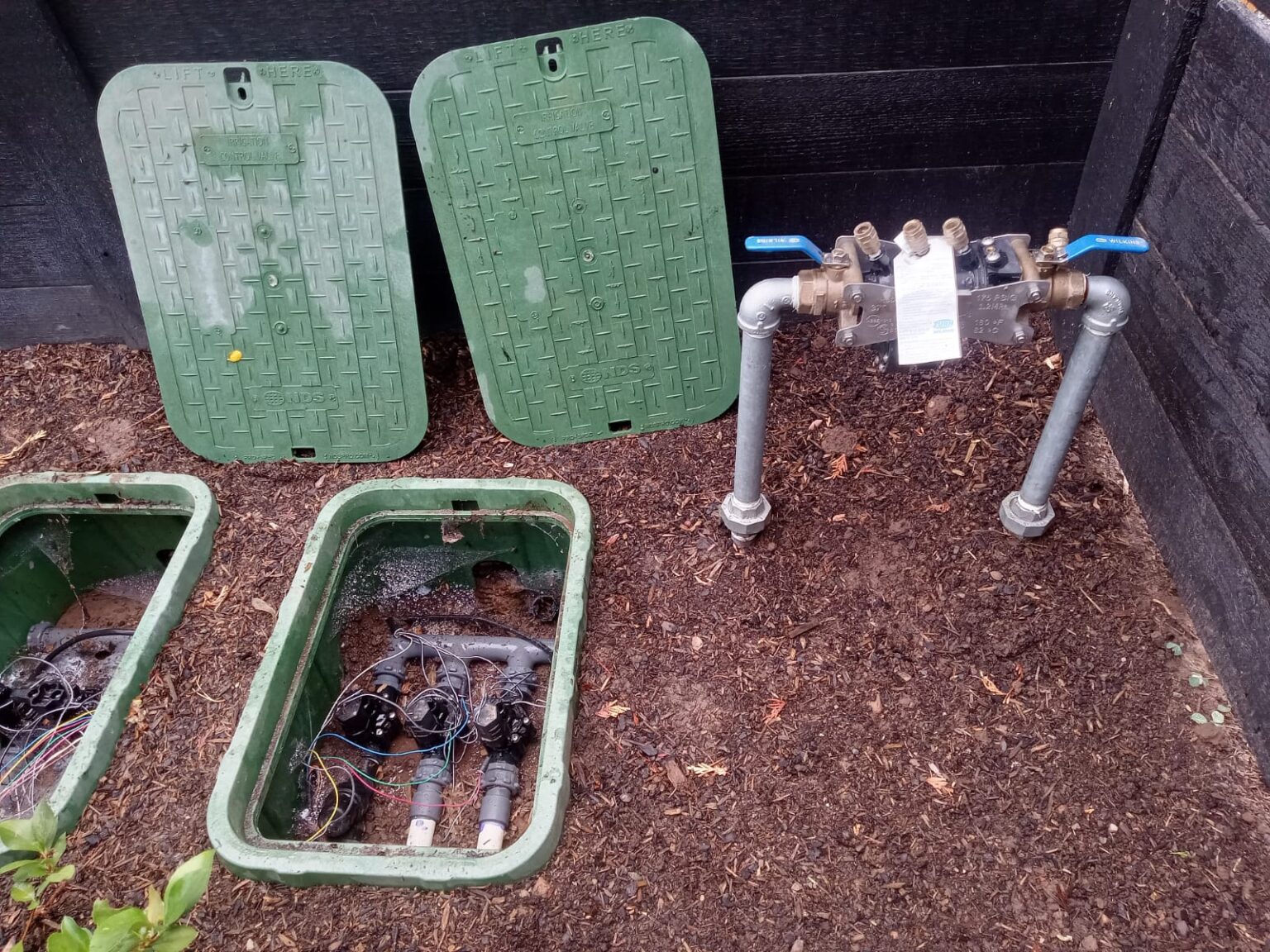
A partially closed shutoff valve anywhere in your system is the easiest fix — our technicians find this often after a Utah spring startup when valves were not fully reopened after winter. A clogged backflow preventer or inline filter reduces pressure across the entire system and is frequently caused by Utah’s hard water mineral sediment accumulating over multiple seasons. An underground line break that allows water to escape before reaching the heads also dramatically reduces zone pressure.
Utah’s hard water is particularly aggressive in creating mineral scale buildup inside backflow preventers, filter screens, and nozzle orifices — a problem we diagnose regularly across both Salt Lake County and Utah County. Backflow preventer cleaning or replacement runs $100–$600 depending on the device condition and whether replacement parts or full device swap is needed.
Same-day service available: Utah Sprinkler Experts carries the most common replacement parts on every service vehicle — heads, solenoids, diaphragms, and fittings — so most repairs across Salt Lake County and Utah County are completed in a single visit with upfront pricing before any work begins.